
What Is Turkish Mezze? A Complete Guide
Cold and hot, vegetable and seafood, eaten slowly with friends and a glass of rakı — everything you need to know about Turkish mezze.
 Roof Mezze 360 · Sirkeci
For more than four centuries Istanbul was the capital of an empire that stretched from the Balkans to Arabia. Its kitchens gathered ingredients, cooks and ideas from all of those lands — and the result is what we call Ottoman cuisine.
At Topkapı Palace, a short walk from our restaurant, the imperial kitchens fed thousands of people every day. You can still see the long row of domed kitchen buildings and chimneys inside the palace. Cooks specialised: some made only bread, others only pastry, sweets, pickles or sherbets. Recipes were refined over generations and passed from master to apprentice.
The empire's reach shows in its food:
Sweet and savoury were often combined: meat with dried fruit, rice with currants and pine nuts.
After the empire ended in 1922, palace cooks opened restaurants and taught others. Ottoman recipes became part of everyday Istanbul cooking, and in recent decades chefs have rediscovered many of them from old manuscripts.
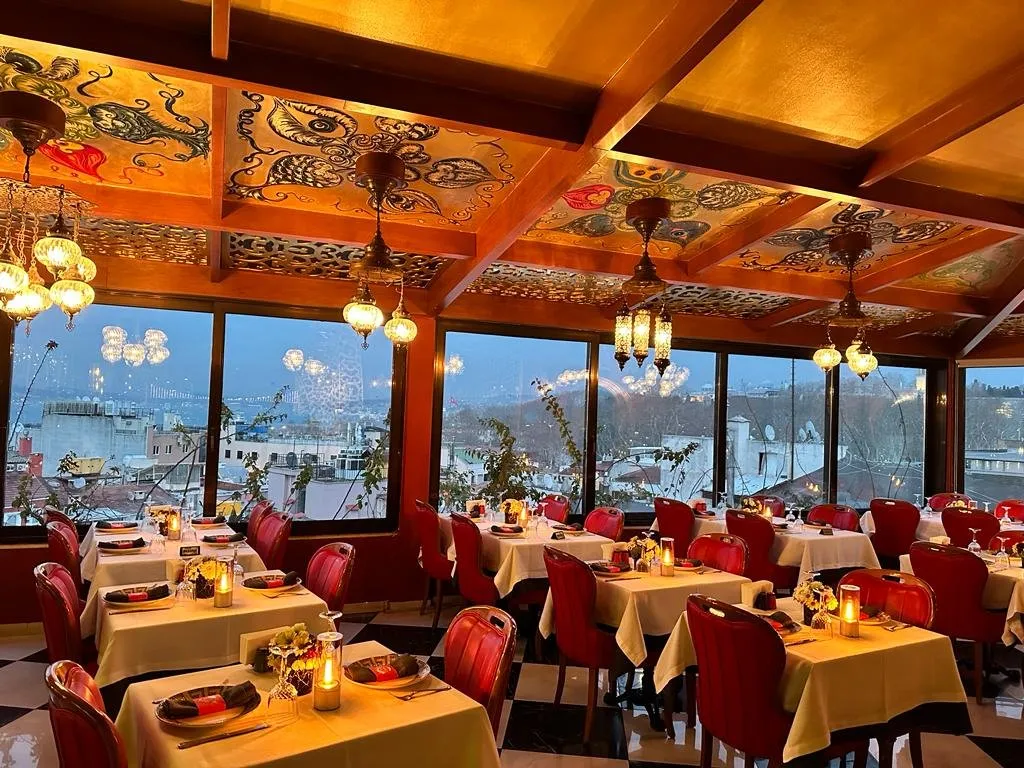
Our menu at Roof Mezze 360 has a whole Ottoman kitchen section: Hünkar Beğendi, Ottoman kavurma, lamb shank, beef stew with black plum, lamb shoulder for two and the pottery kebab. Start with vine leaves with sour cherry from the cold mezes and you'll have tasted a little of the sultans' table — with a view the palace cooks never had.